
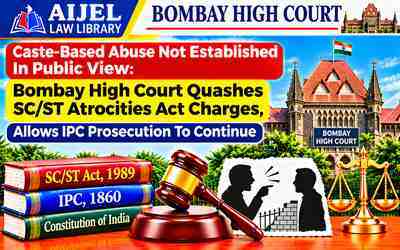
Caste-Based Abuse Not Established In Public View: Bombay High Court Quashes SC/ST Atrocities Act Charges, Allows IPC Prosecution To Continue.
2026 (0) AIJEL-MH 2506989
In a significant ruling, the Bombay High Court addressed the Criminal Writ Petition No. 3490 of 2022 filed by Nisar Mohammed Pathan and others against the State of Maharashtra. The petition sought to quash the First Information Report (FIR) registered on November 17, 2021, for offences under the Indian Penal Code (IPC) and the Scheduled Castes and Scheduled Tribes (Prevention of Atrocities) Act, 1989.
The FIR alleged that the petitioners had demolished a compound wall and used caste-based slurs against the complainant, Respondent No. 2. The petitioners contended that the allegations did not constitute an offence under the Atrocities Act, arguing that there was a lack of independent witness corroboration and that the dispute was essentially civil in nature, given that a civil suit regarding the property was already pending.
The court noted that while the complainant and his family members testified to the alleged abuse, no independent witnesses corroborated these claims. The court emphasized that the absence of independent witnesses undermined the applicability of the Atrocities Act, particularly as the alleged incident did not occur in public view, which is a requisite for establishing such charges.
Consequently, the court quashed the charges under Sections 3(1)(r), 3(1)(s), and 3(2)(va) of the Atrocities Act, determining that the prima facie evidence did not support these allegations. However, the court found sufficient prima facie material to continue proceedings for the IPC offences, including Sections 143, 149, 427, 504, and 506, which pertain to unlawful assembly, rioting, mischief, and criminal intimidation.
The ruling highlighted the importance of corroborative evidence in cases involving caste-based allegations under the Atrocities Act and clarified that while the charges under this Act were quashed, the IPC proceedings would continue as per the law. The court directed the trial court to proceed with the IPC charges, ensuring that the matter would be adjudicated on its own merits without influence from the observations made in this ruling.
The petition was partly allowed, with the court emphasizing that the observations were prima facie and would not affect the trial's outcome. The ruling underscores the judiciary's role in balancing the protection of marginalized communities under the Atrocities Act with the need for substantiated evidence in criminal proceedings.