
No Improvement In Accused's Mental Health For 17 Years: Rajasthan High Court Refuses To Close Murder Case, Extends Medical Examination Interval From 3 To 18 Months
2026 (0) AIJEL-RJ 1869788
In a significant ruling, the Rajasthan High Court addressed the case of Chandrakant, an 86-year-old accused of murder under Section 302 IPC. The petitioner sought to quash the proceedings against him, citing his mental incapacity due to schizophrenia, which he has suffered from for many years. The case, originating from an FIR registered in 2006, has seen the petitioner undergo regular medical evaluations to assess his mental fitness to stand trial.
The petitioner’s counsel argued that despite numerous medical examinations since 2009, the petitioner remains unable to comprehend court proceedings, thus rendering him unfit for trial. The counsel emphasized the burden on the petitioner’s family to ensure his attendance for these evaluations, which have been mandated every three months. The petitioner’s condition was supported by medical opinions stating he could not understand the proceedings against him.
Conversely, the Public Prosecutor contended that schizophrenia is not necessarily incurable and that the possibility of the petitioner’s recovery should not exempt him from facing trial for serious charges. The prosecution maintained that the trial should continue until the petitioner is deemed fit to stand trial.
The Court recognized the fundamental right to a fair trial under Article 21 of the Constitution, asserting that an accused must be mentally competent to understand the charges and defend themselves. The Court noted that the ongoing medical evaluations had not led to any improvement in the petitioner’s condition over 17 years, which raised concerns about the practicality of continuing such frequent assessments.
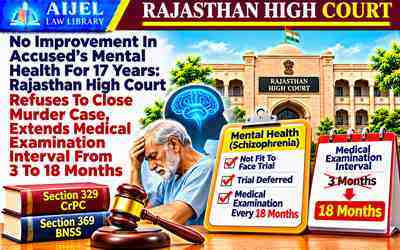
Ultimately, the Court modified the previous order regarding the frequency of medical examinations. Instead of every three months, the petitioner is now required to undergo evaluations every 18 months. This adjustment aims to balance the rights of the accused with the need for justice, allowing the trial to remain open while reducing the frequency of medical assessments. The Court directed that if the Medical Board later certifies the petitioner as mentally fit, the trial could resume accordingly.
This ruling underscores the Court's commitment to ensuring that the legal process respects both the rights of the accused and the interests of justice, particularly in cases involving mental health issues.