
Accepting A Practising Advocate’s Phone Amounts To Judicial Misconduct: Gujarat High Court Upholds Judicial Officer’s Dismissal
2026 (0) AIJEL-HC 254088
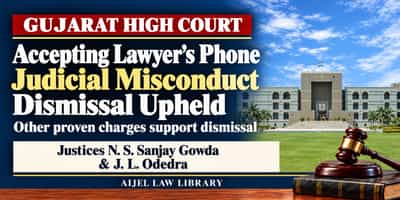
The Gujarat High Court has upheld a judicial officer’s dismissal, holding that accepting a mobile phone and SIM card from a practising advocate, coupled with continued close communication, constituted conduct unbecoming of a judicial officer.
A Division Bench of Justices N. S. Sanjay Gowda and J. L. Odedra dismissed the officer’s challenge to his removal from service.
The disciplinary committee found no evidence that the officer had used the phones to demand or obtain bribes, or that he accepted the advocate’s phone in return for granting a favour. Nevertheless, it considered accepting the phone and making 186 calls to the advocate serious impropriety.
The Court agreed, emphasising that judicial officers must maintain distance from practising advocates to prevent an impression of impropriety.
The Bench also upheld findings concerning the officer’s failure to report vehicle purchases and sales within the prescribed period, and an unreported personal loan of ₹35,000. It rejected the argument that claiming petrol allowance could substitute for the disclosure required under the applicable Conduct Rules.
One charge rejected: The Court disapproved the separate charge concerning incorrect judicial procedure. It observed that the officer could not be proceeded against merely for passing a wrong judicial order or failing to follow prescribed procedure while performing judicial functions.
However, the remaining three charges were supported by clear and cogent evidence. Considered together, the Court found that they reflected a lack of integrity and justified dismissal.
The Bench also reiterated the limited scope of judicial review in departmental proceedings: a writ court ordinarily does not reassess evidence as an appellate court or interfere with punishment unless it is disproportionate and shocks the court’s conscience.